Reading the City on Foot: Space, Time, and Everyday Life on Charoen Krung Road
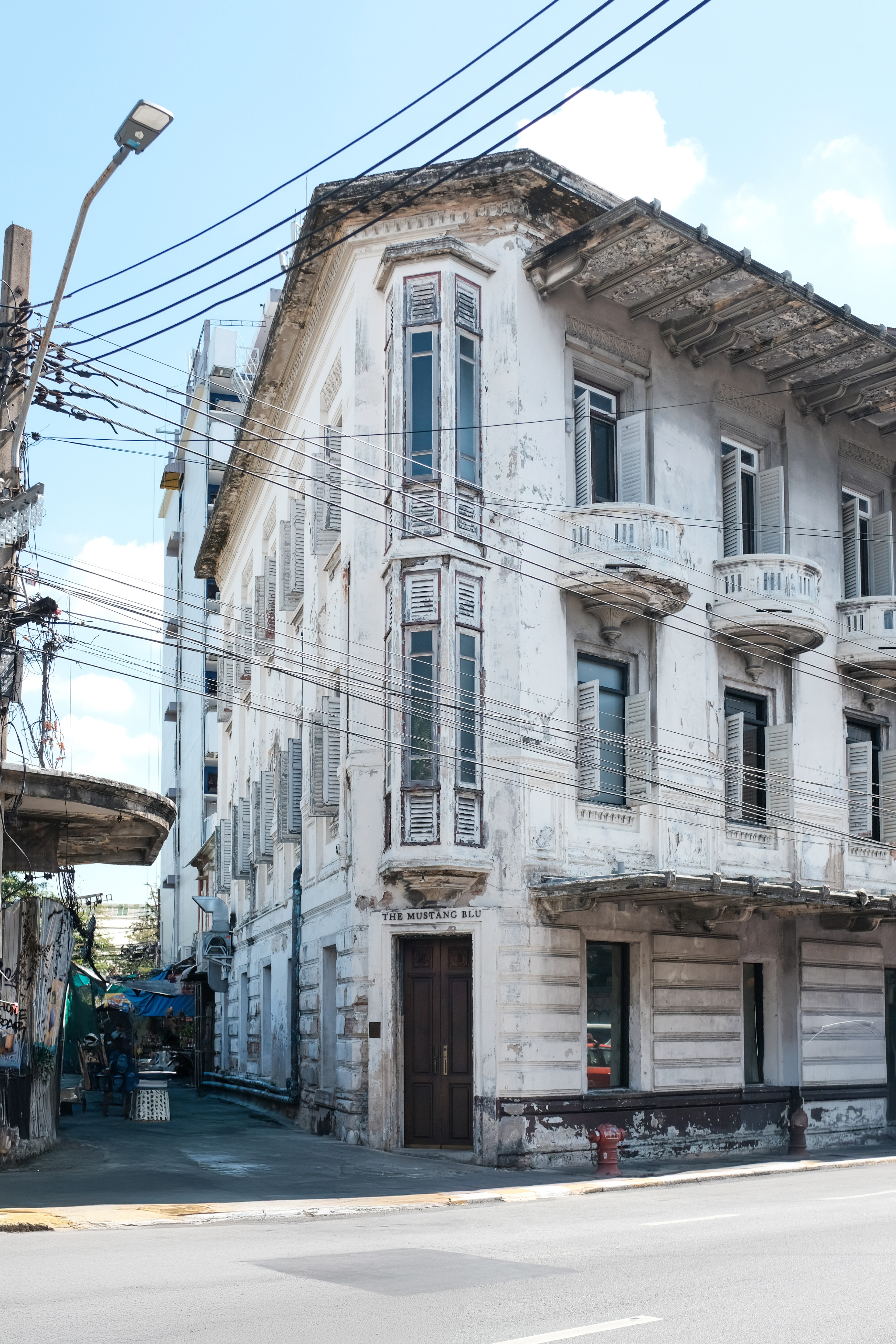
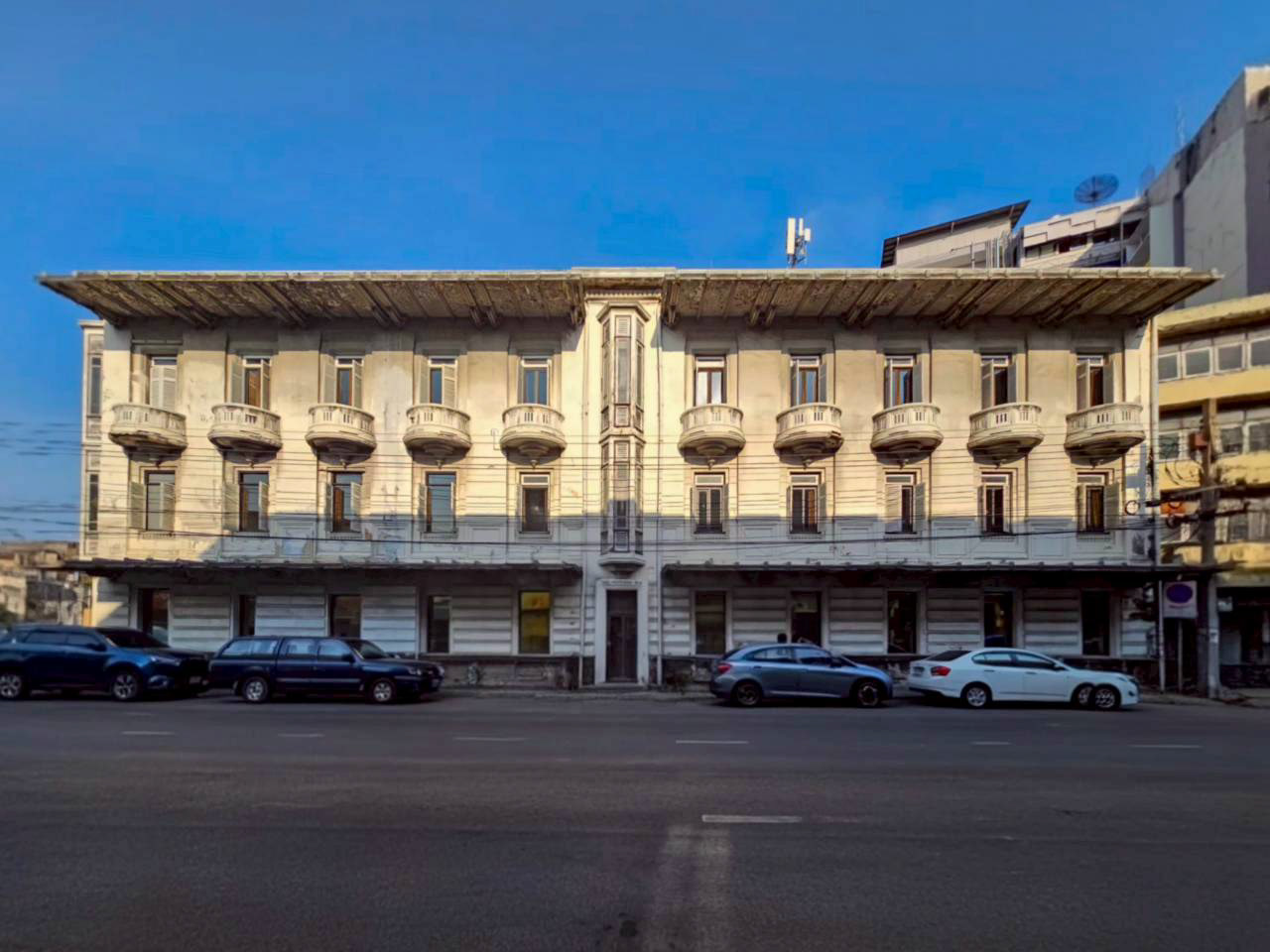
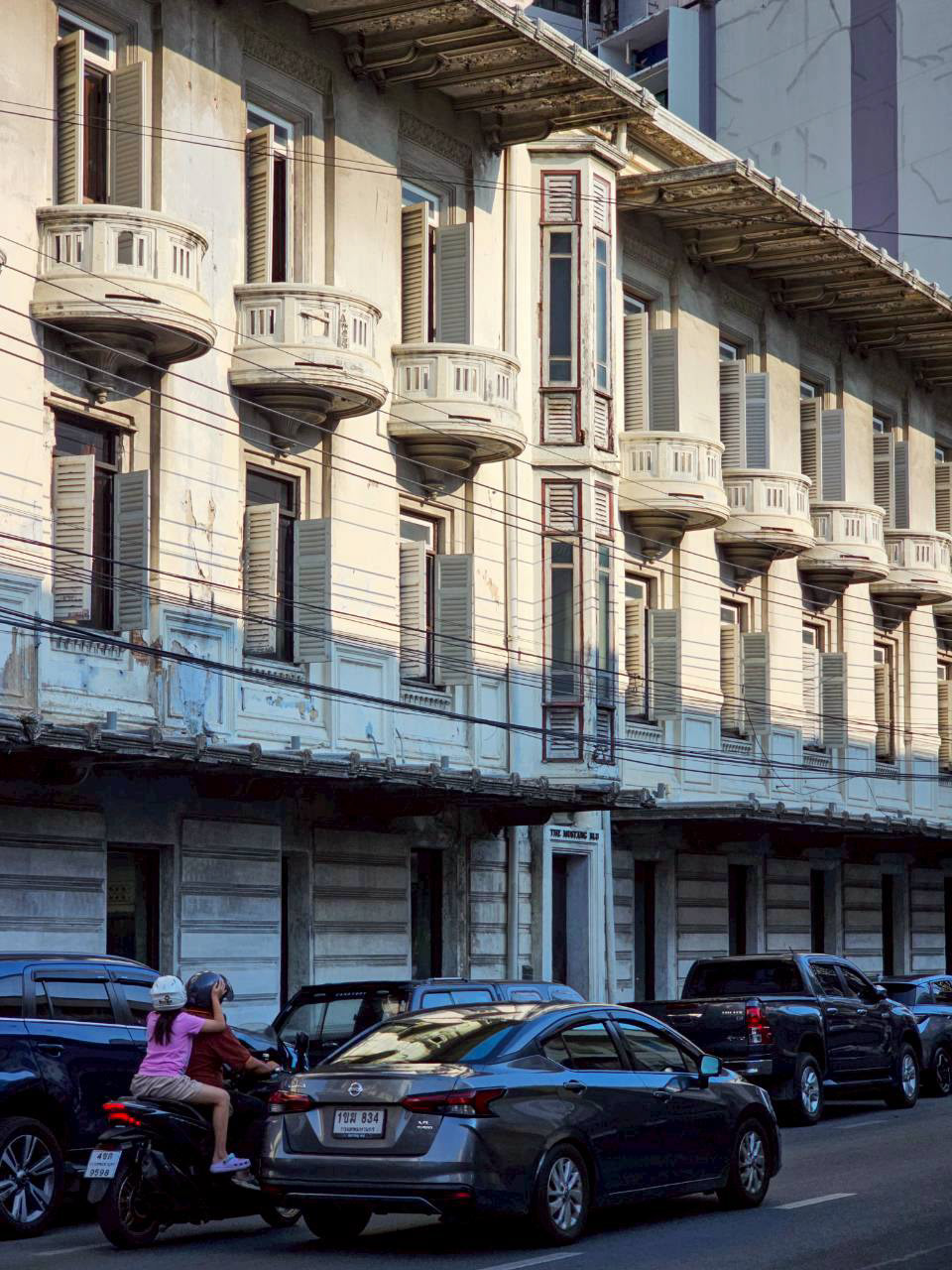
On a Saturday morning in early December, we would normally be sitting in a classroom. But this time was different. Our instructor took us out for a “walk” through the Charoen Krung area. We started late in the morning and split into groups. My group planned to begin at Wat Mangkon MRT, weave through side streets and small alleys, pass the Mohmee intersection, enter Soi Nana, and stop first at the Mustang Blu Hotel.
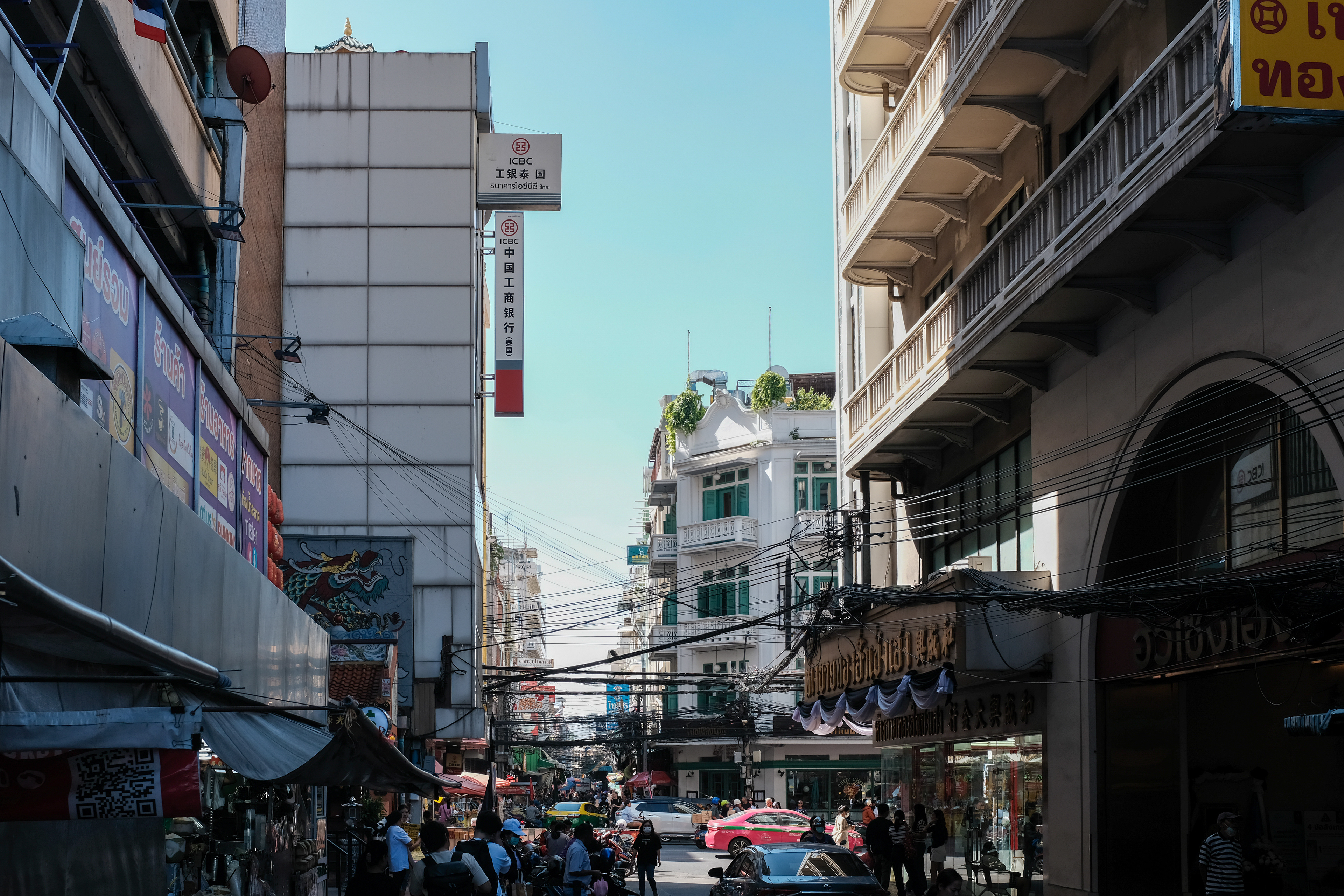
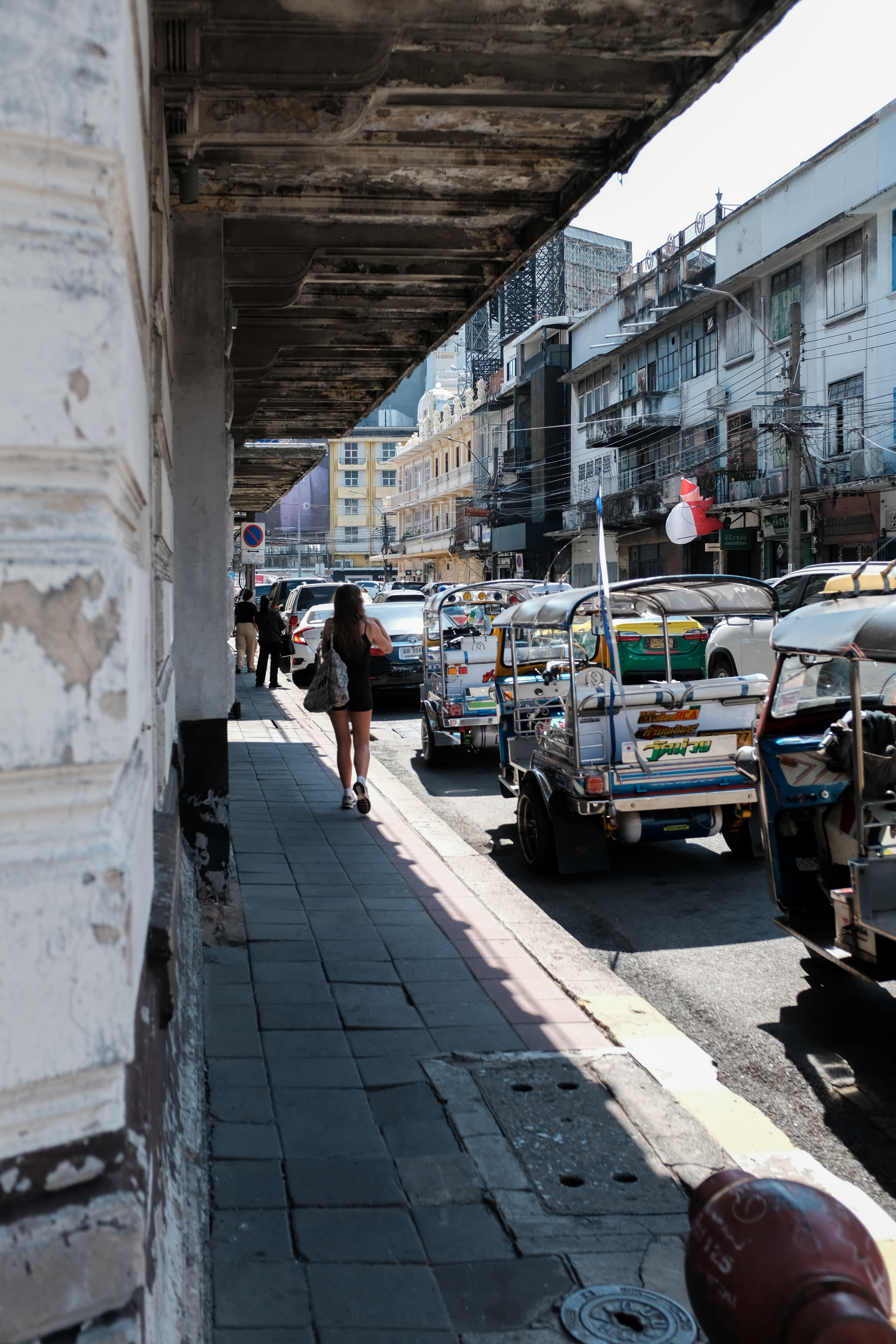
The moment we stepped out of the station, what stood out was not building form, but the conditions of air, light, and shadow. In the late-morning winter sun, with clear skies and intensifying heat, the only continuous shade along the route was cast by buildings. That shade became a key spatial resource for the neighborhood. Although it was never “designed” on any plan, it was used with clear intent. Street-side noodle shops carried tables and chairs out and lined them up along the shadow line, allowing customers to eat without relying on air-conditioning. It was an ongoing adjustment between people and environment — repeated so often that it became a kind of shared knowledge within the community.
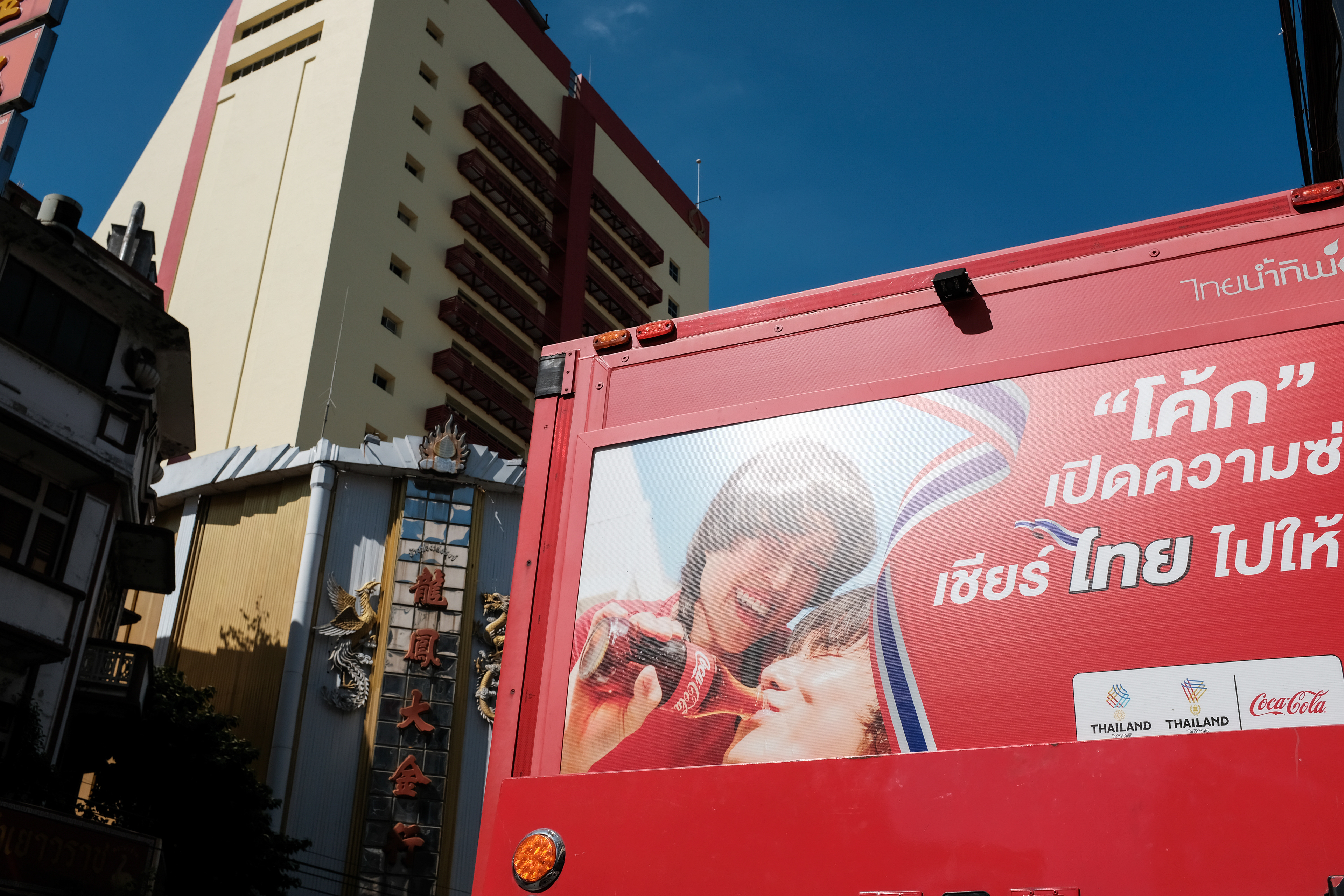
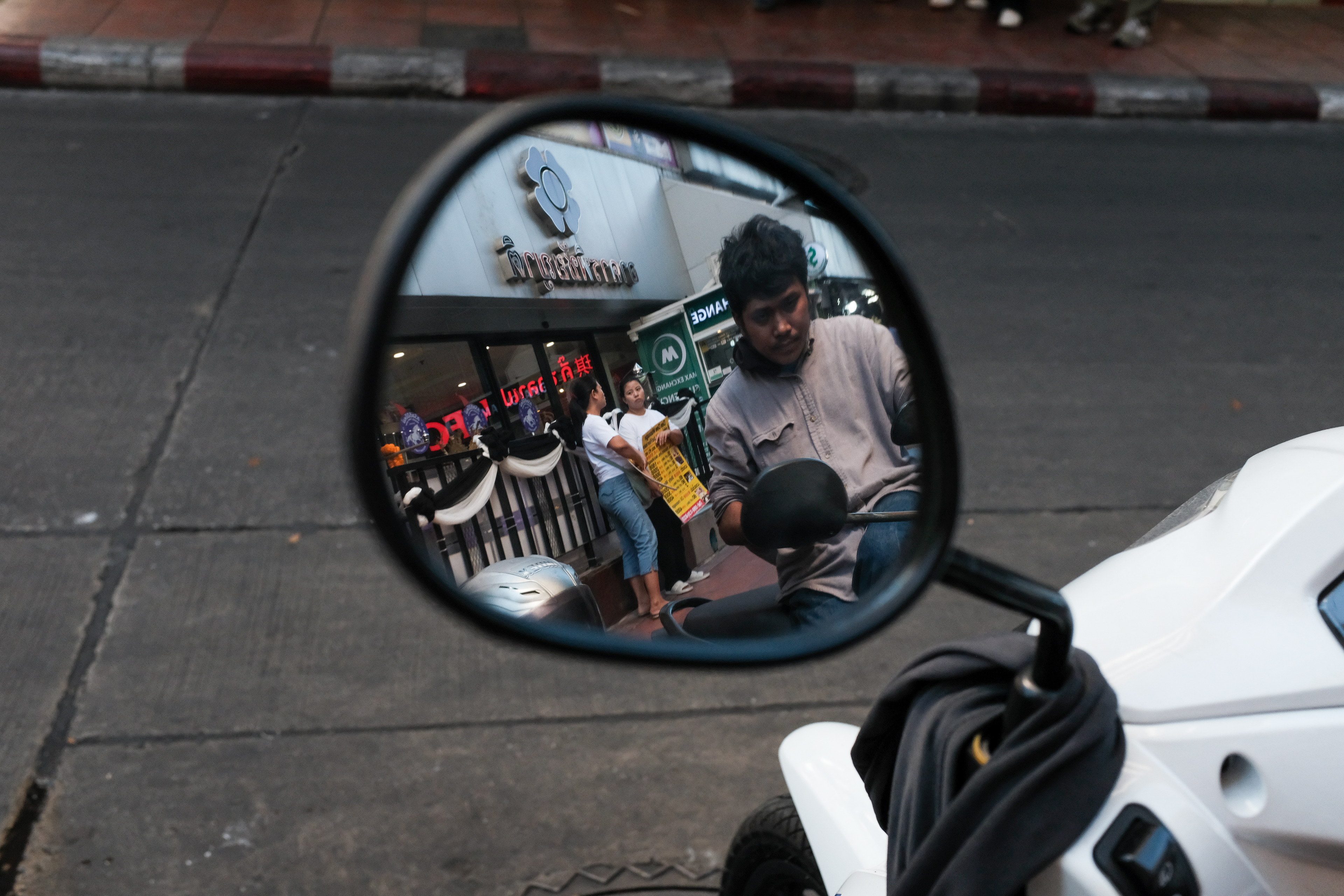
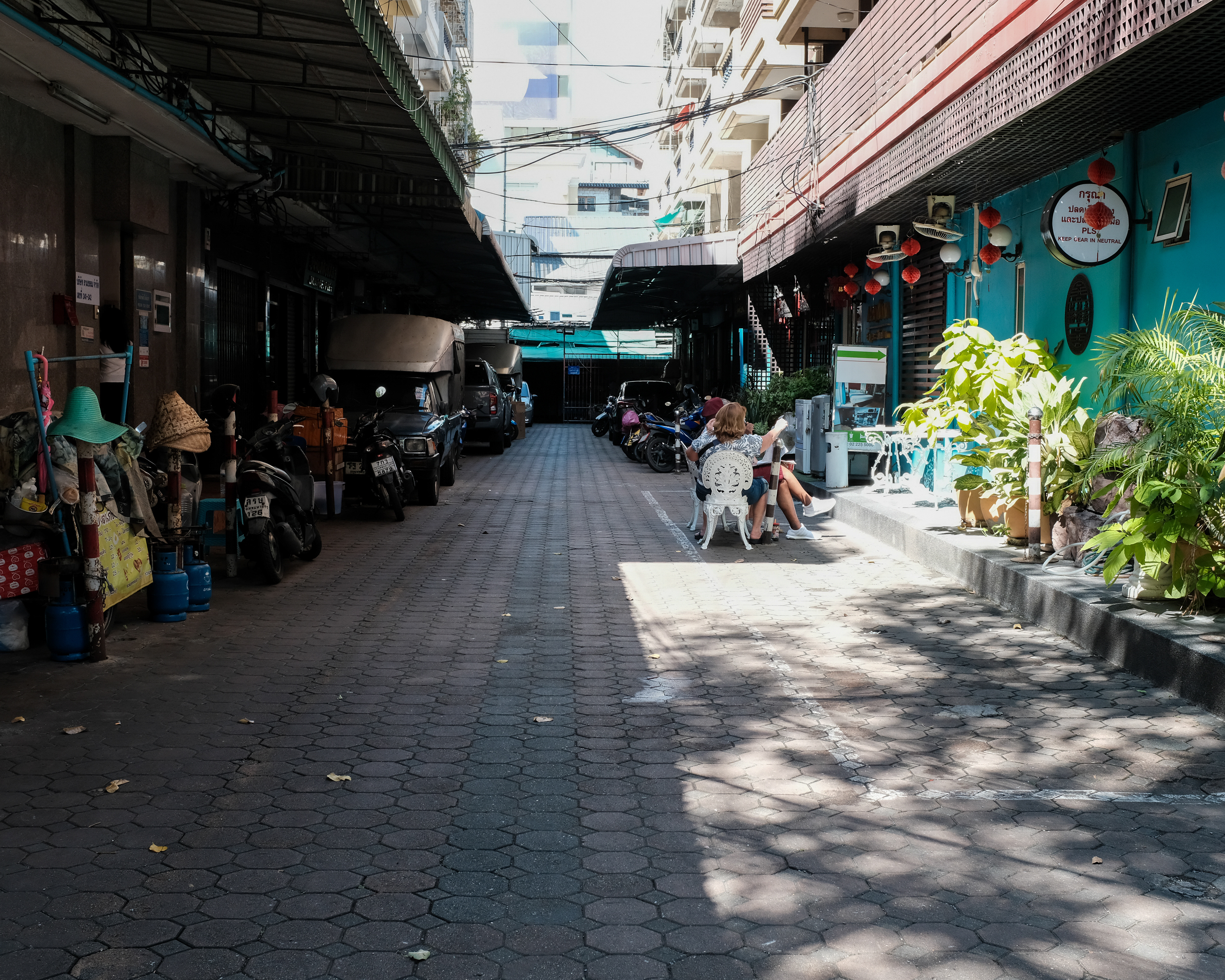
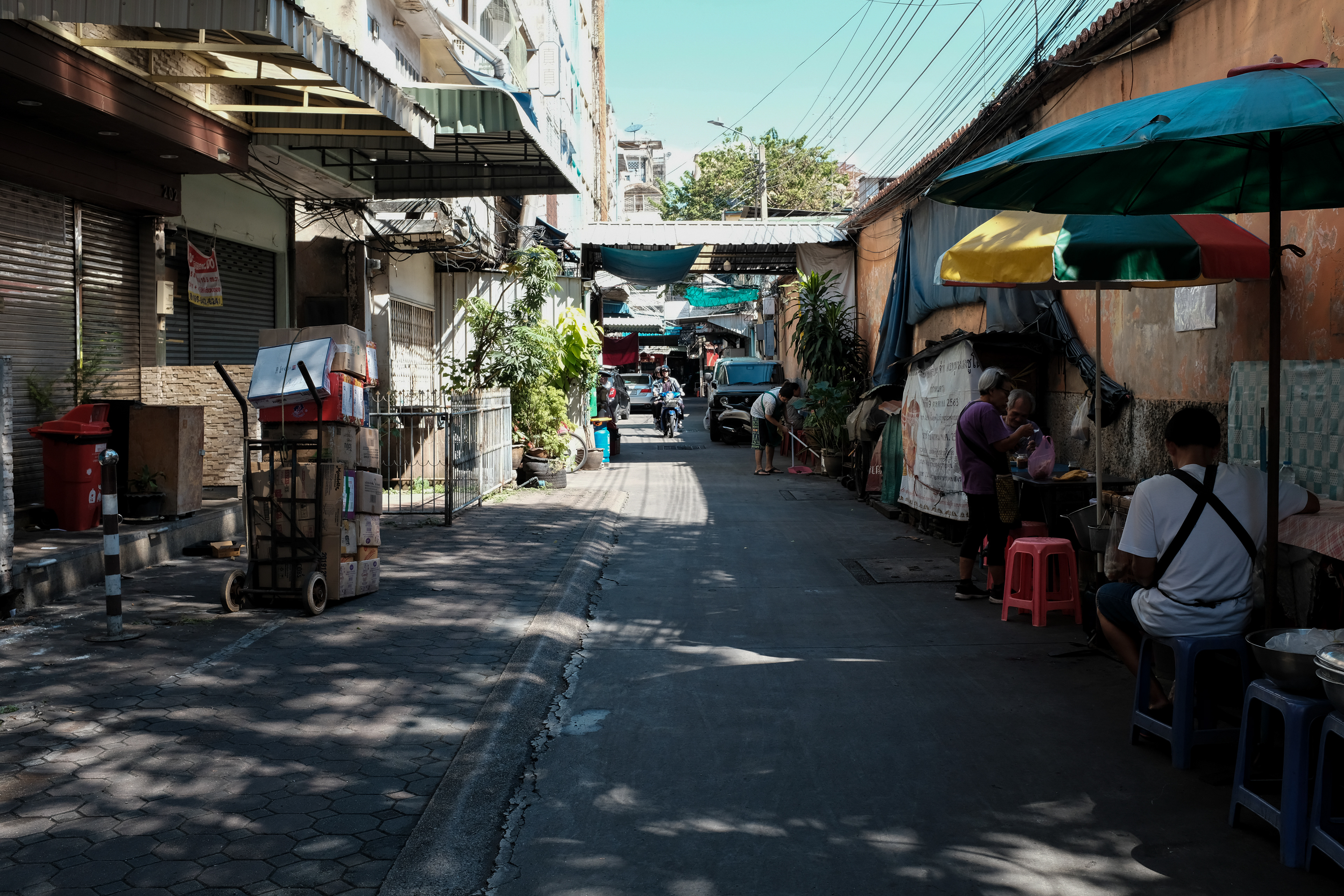
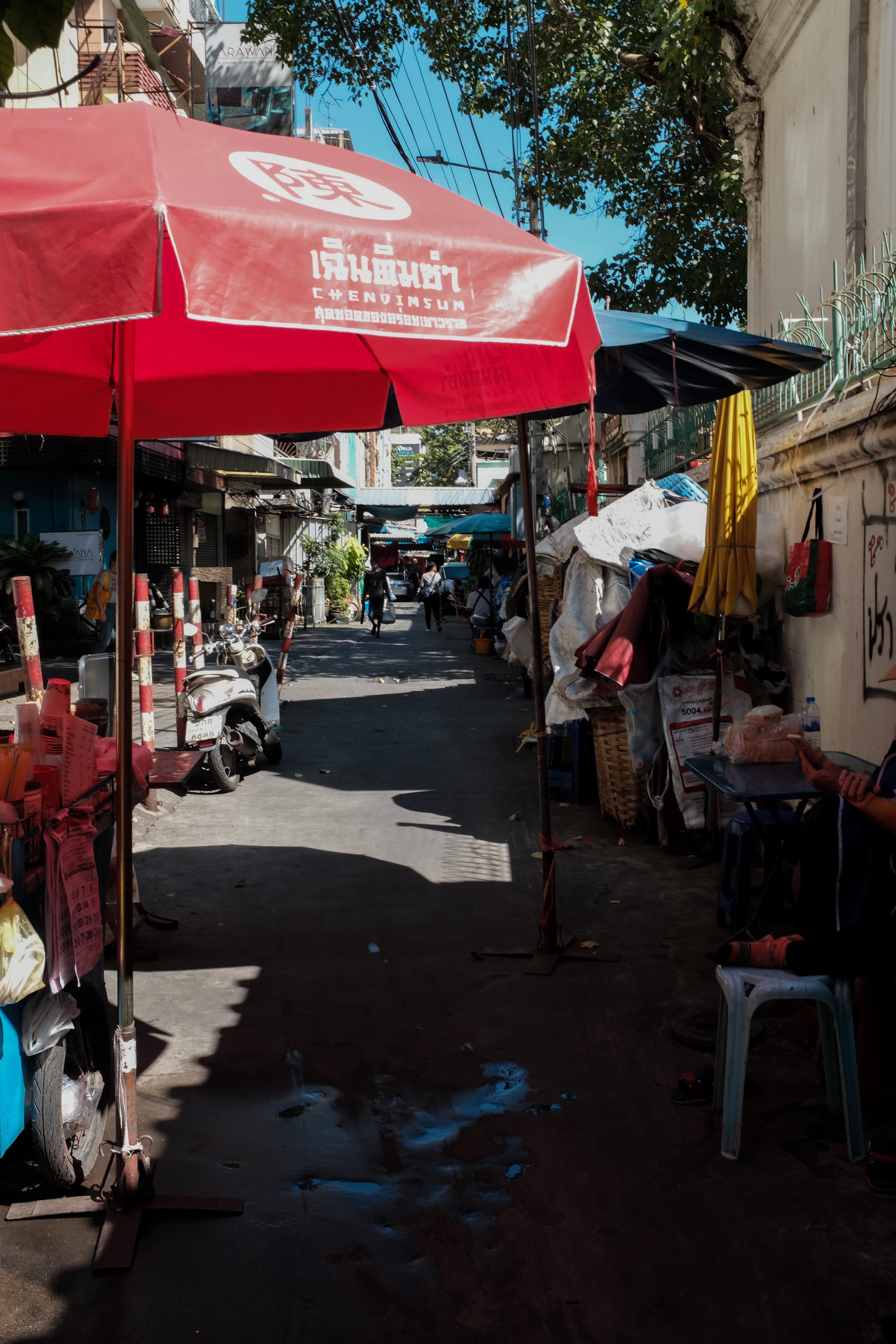
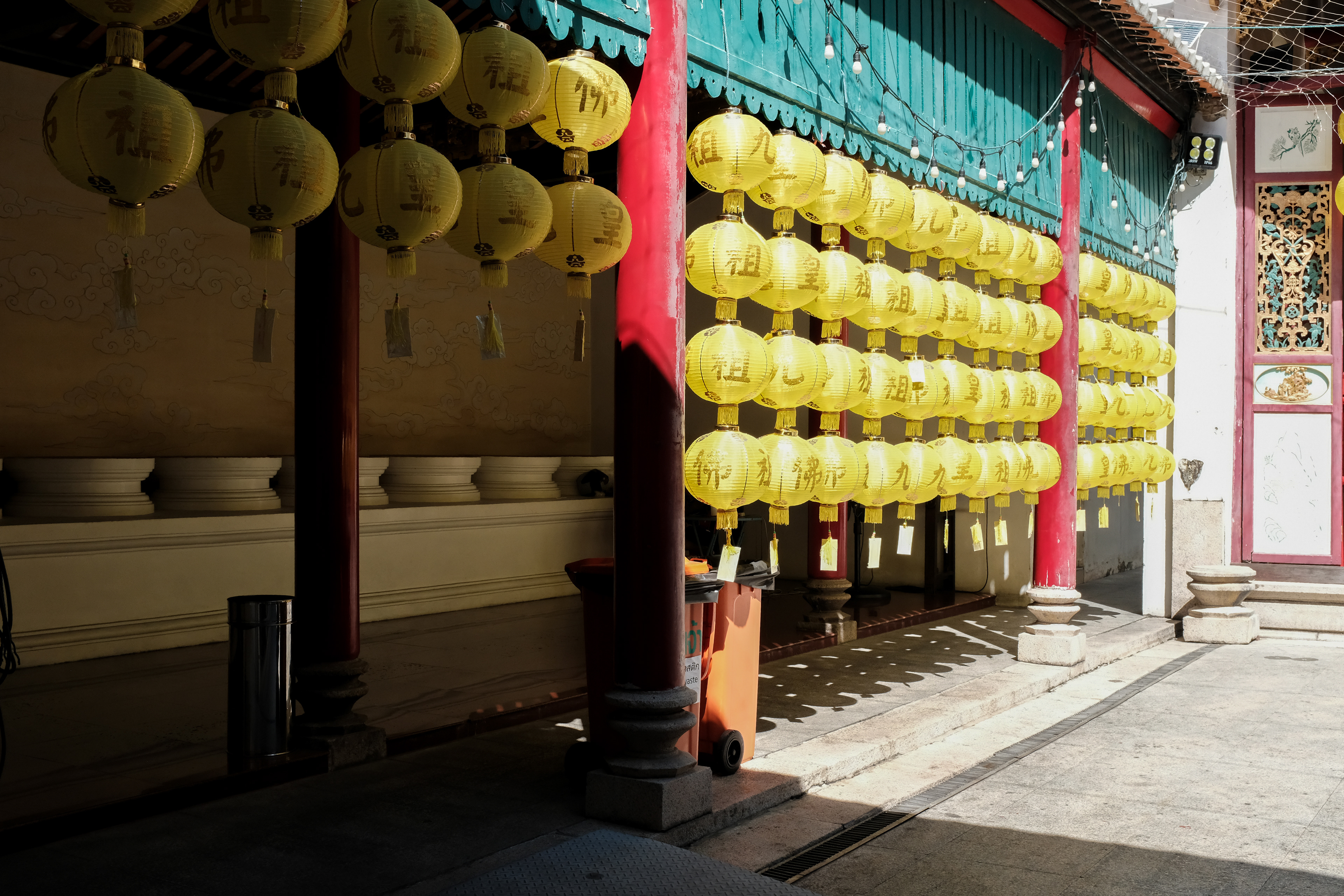
At the mouth of one alley, a group of motorcycle taxi drivers gathered in a small pocket of shade. The shadow of the building was transformed into a waiting area: a temporary seating arrangement that was easy to assemble, yet used as if it were permanent. It sat in a spot everyone knew would remain out of direct sun. The space supported different activities — playing checkers, watching vertical-format dramas, or chatting over the sound of passing traffic. There was no sign defining its purpose, yet it was shaped by weather, time, and collective use. In quieter alleys, the same kind of shaded space shifted roles and became a parking area, showing that space does not carry a fixed meaning — it changes with activity, climate, and time of day.
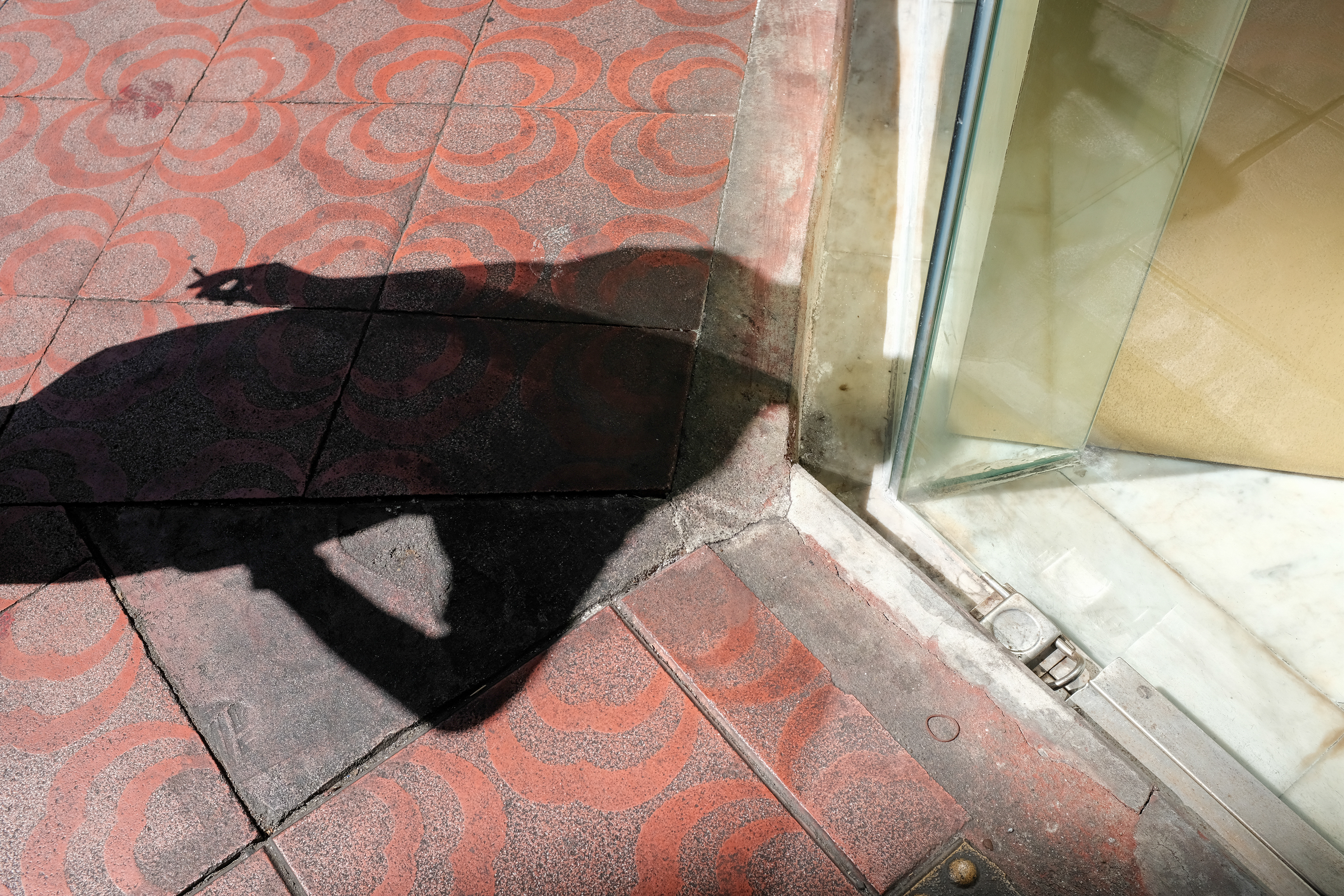
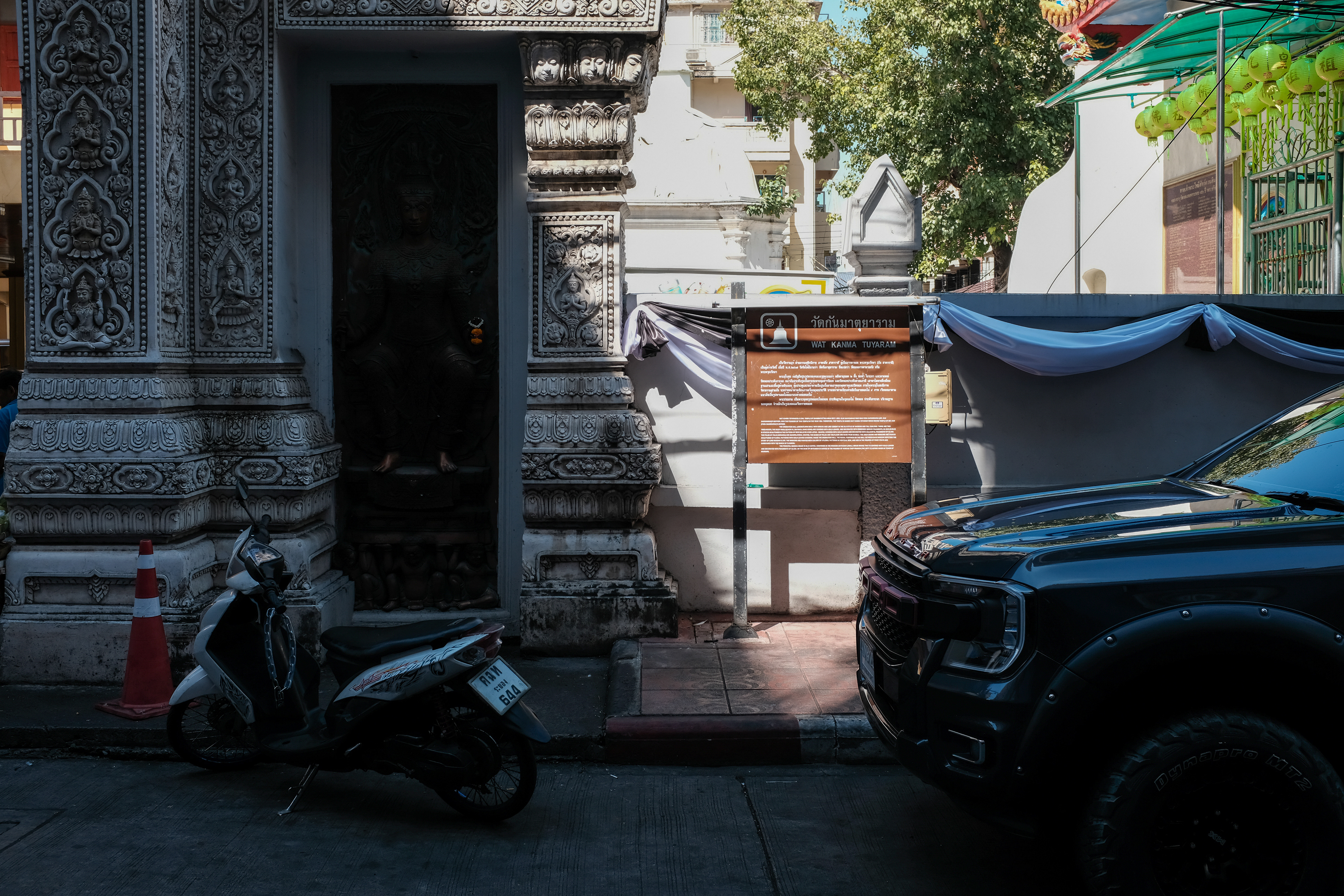
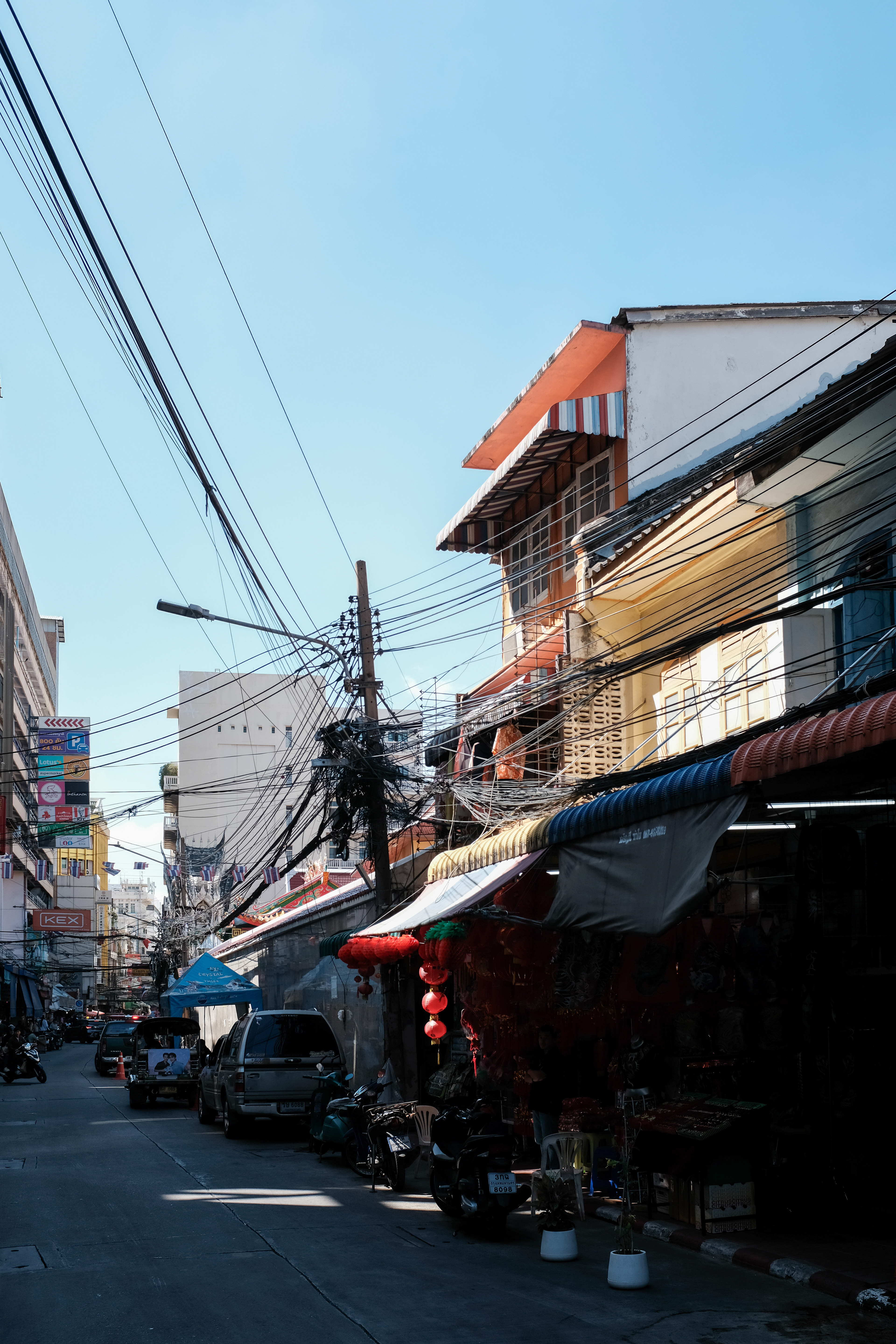
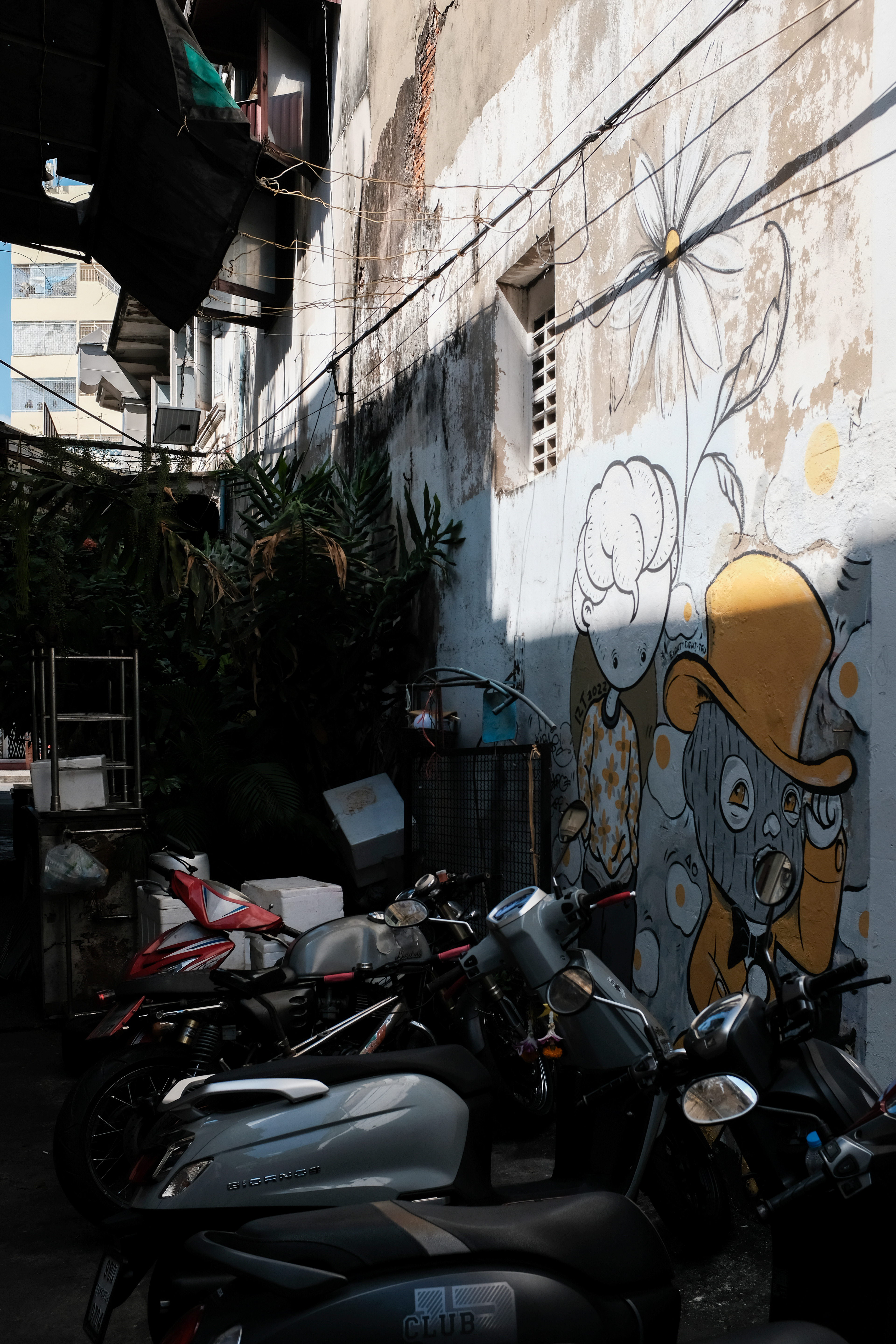
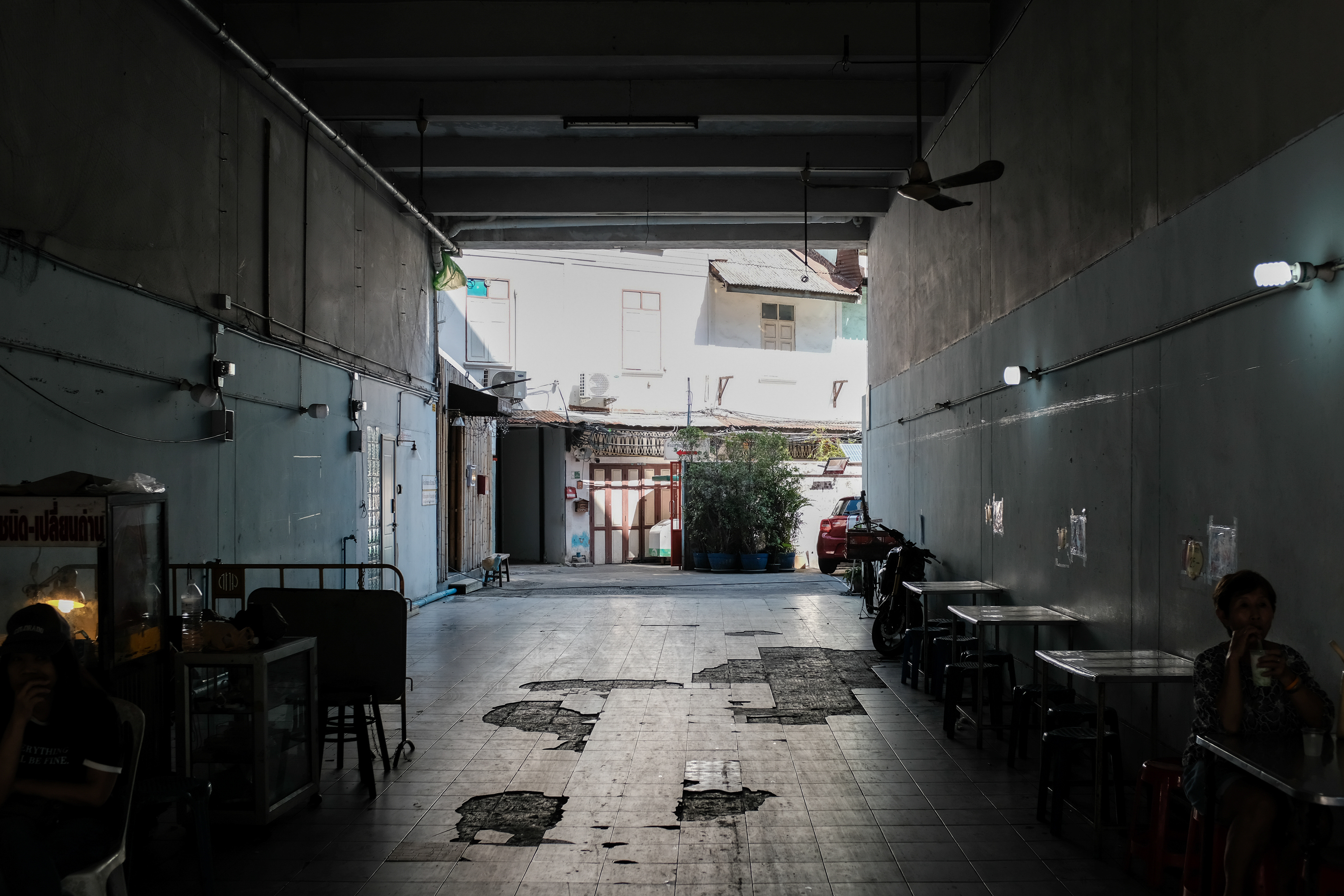
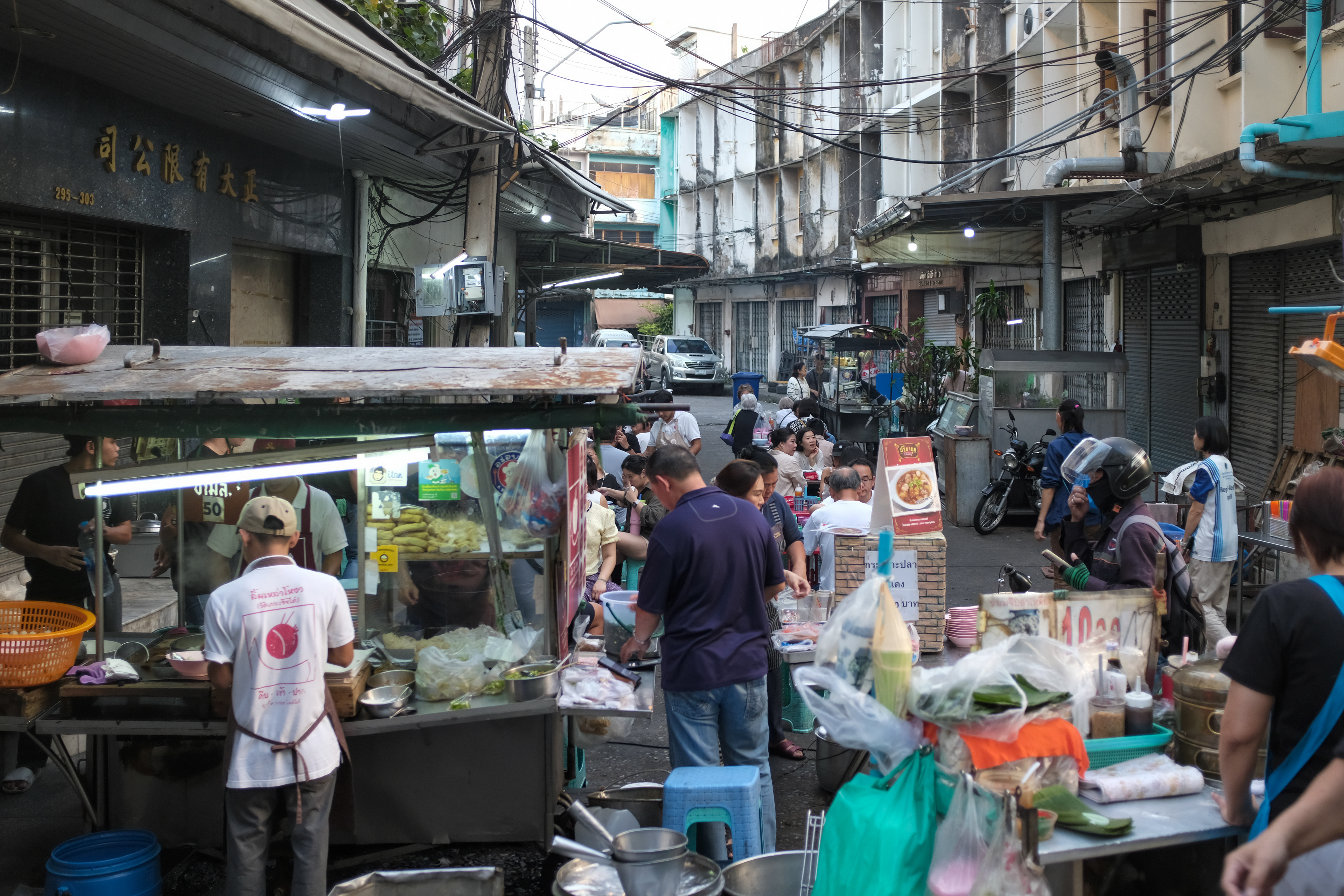
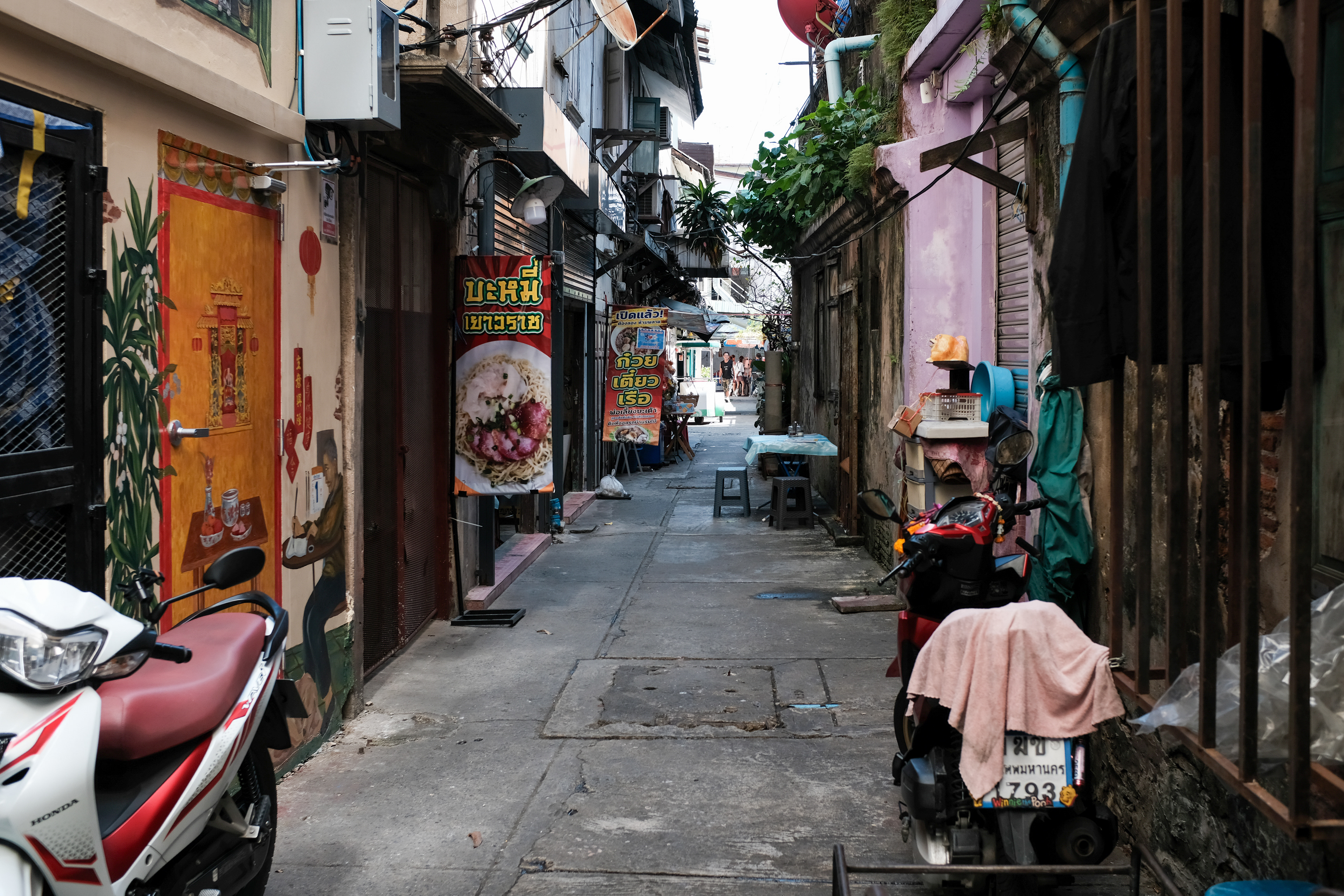
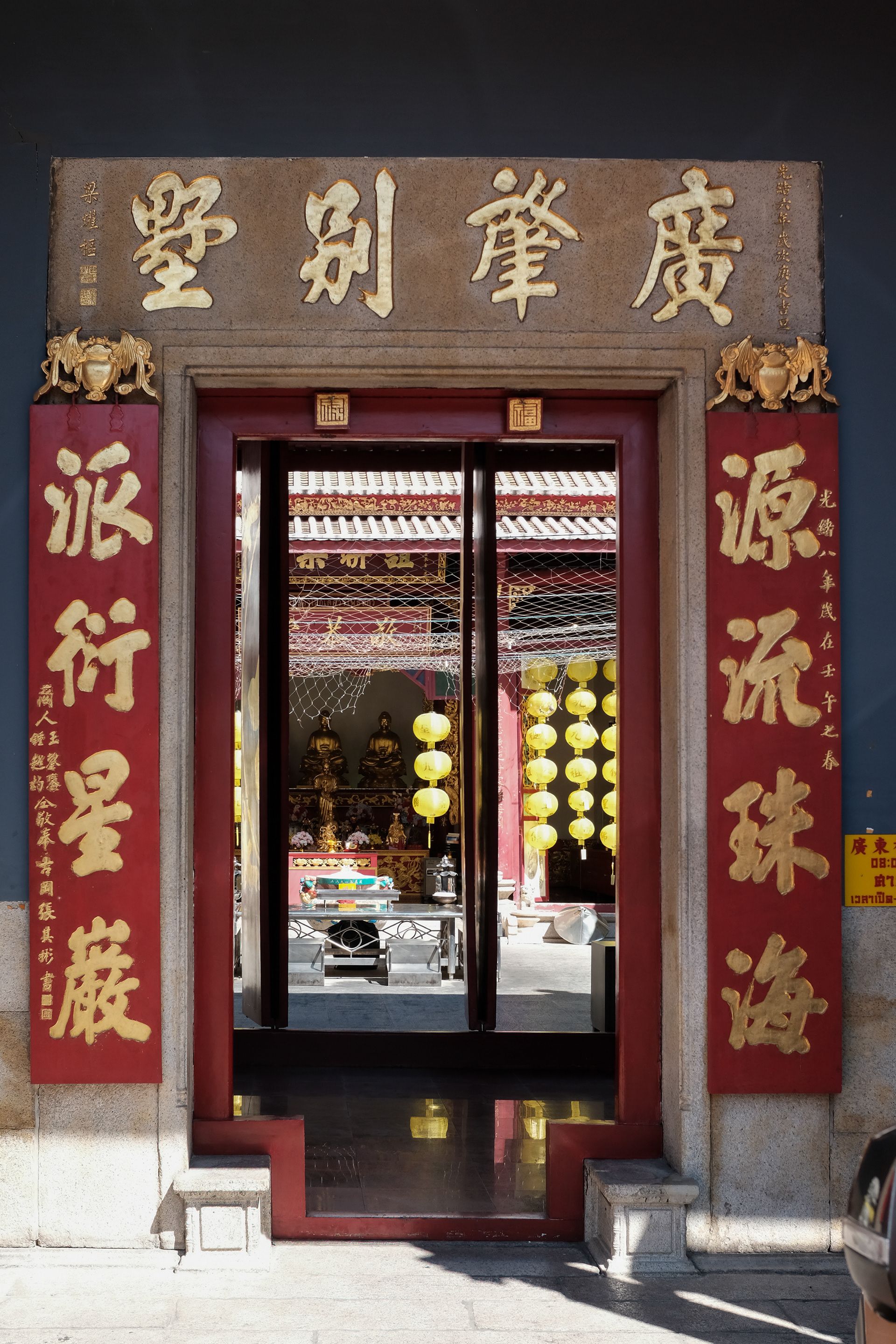
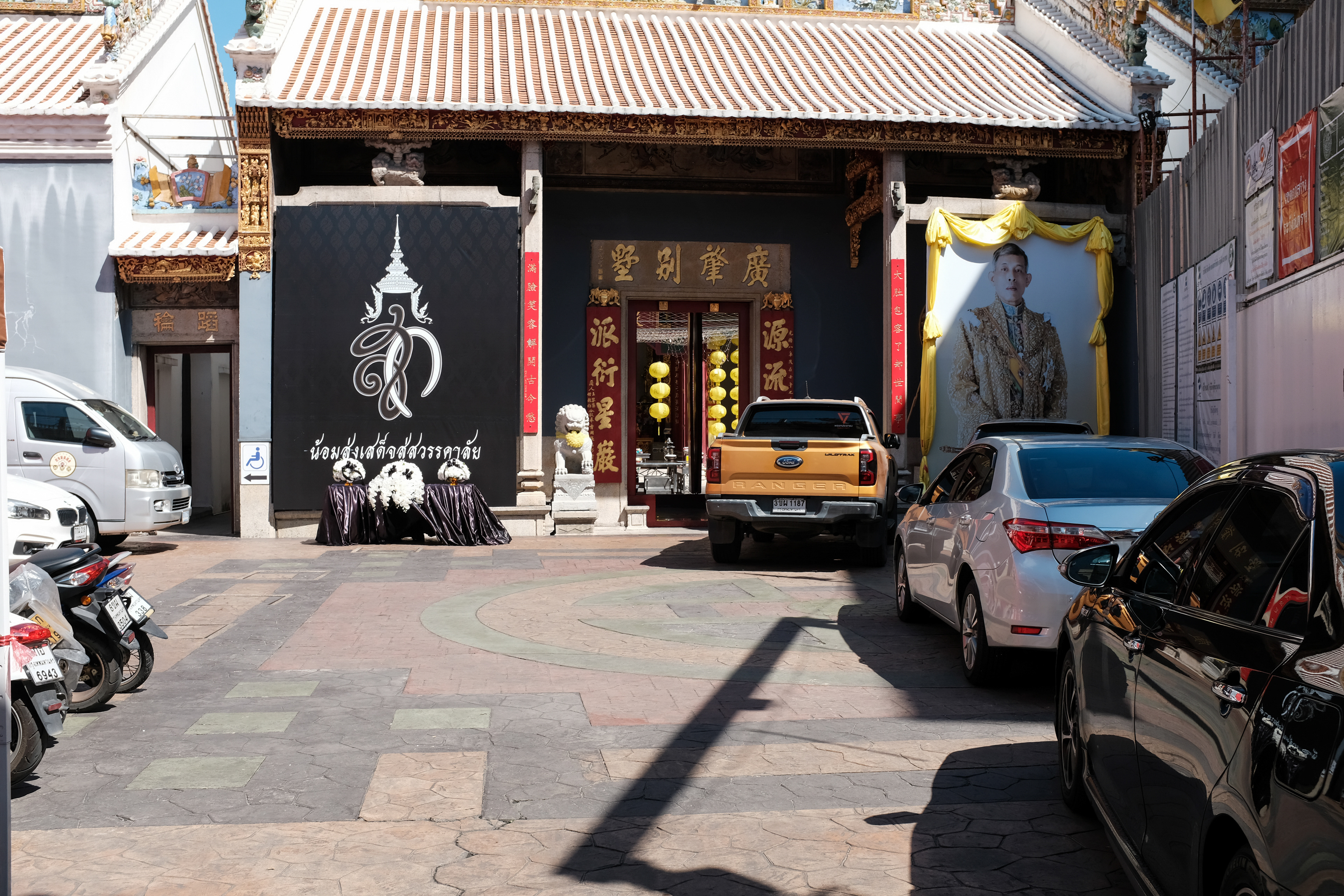
Along this route, we shared a similar premise: this walk was a way to ask what these areas are doing today — places where old and new are fused, where restaurants and stylish cafés have emerged rapidly, reusing older buildings as structural frameworks, adjusting functions and interiors to create a distinct identity without breaking away from the surrounding context. Many of these venues are described as “hidden spots,” complete with Google Maps locations. The question is: what role are these places playing in the present?
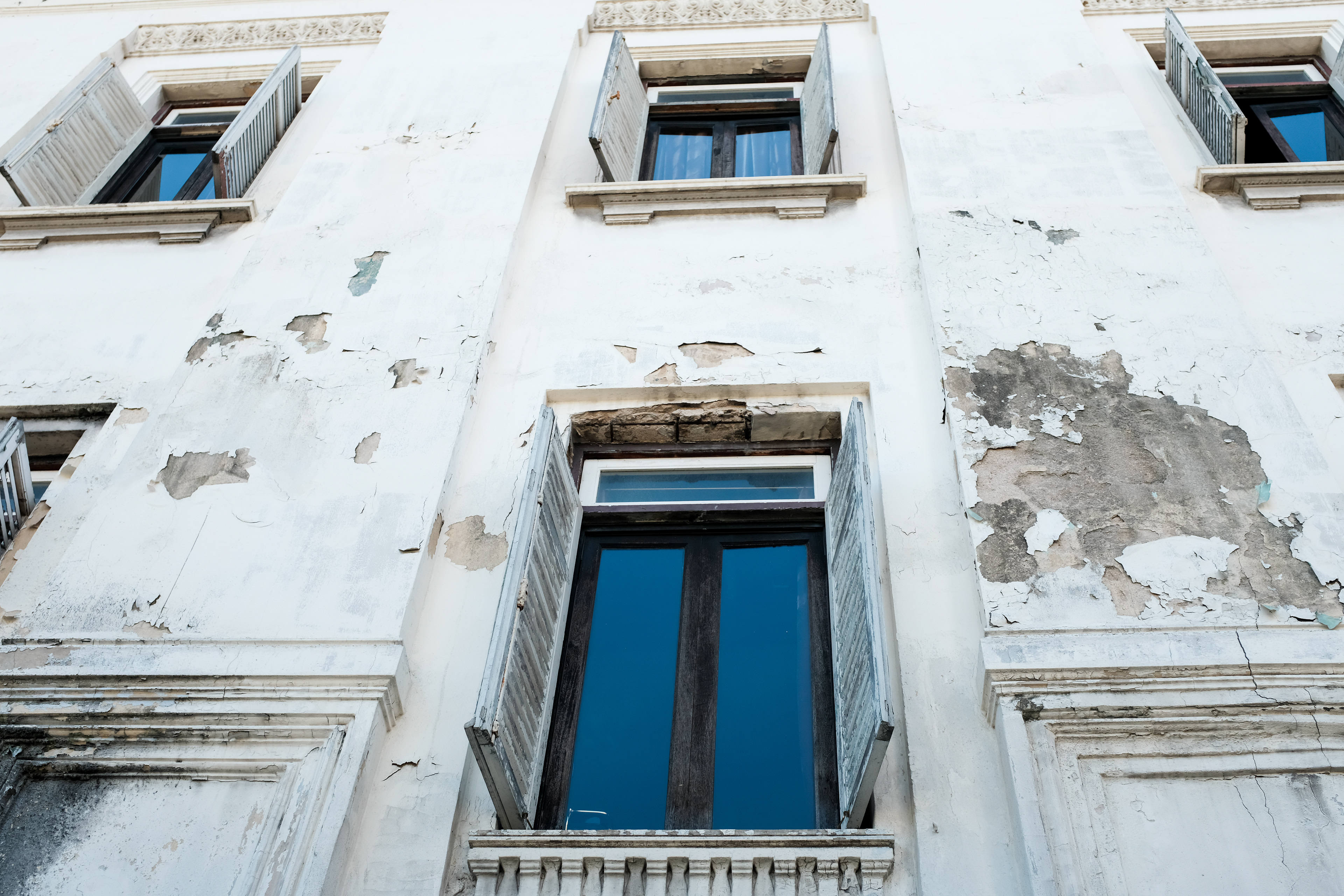
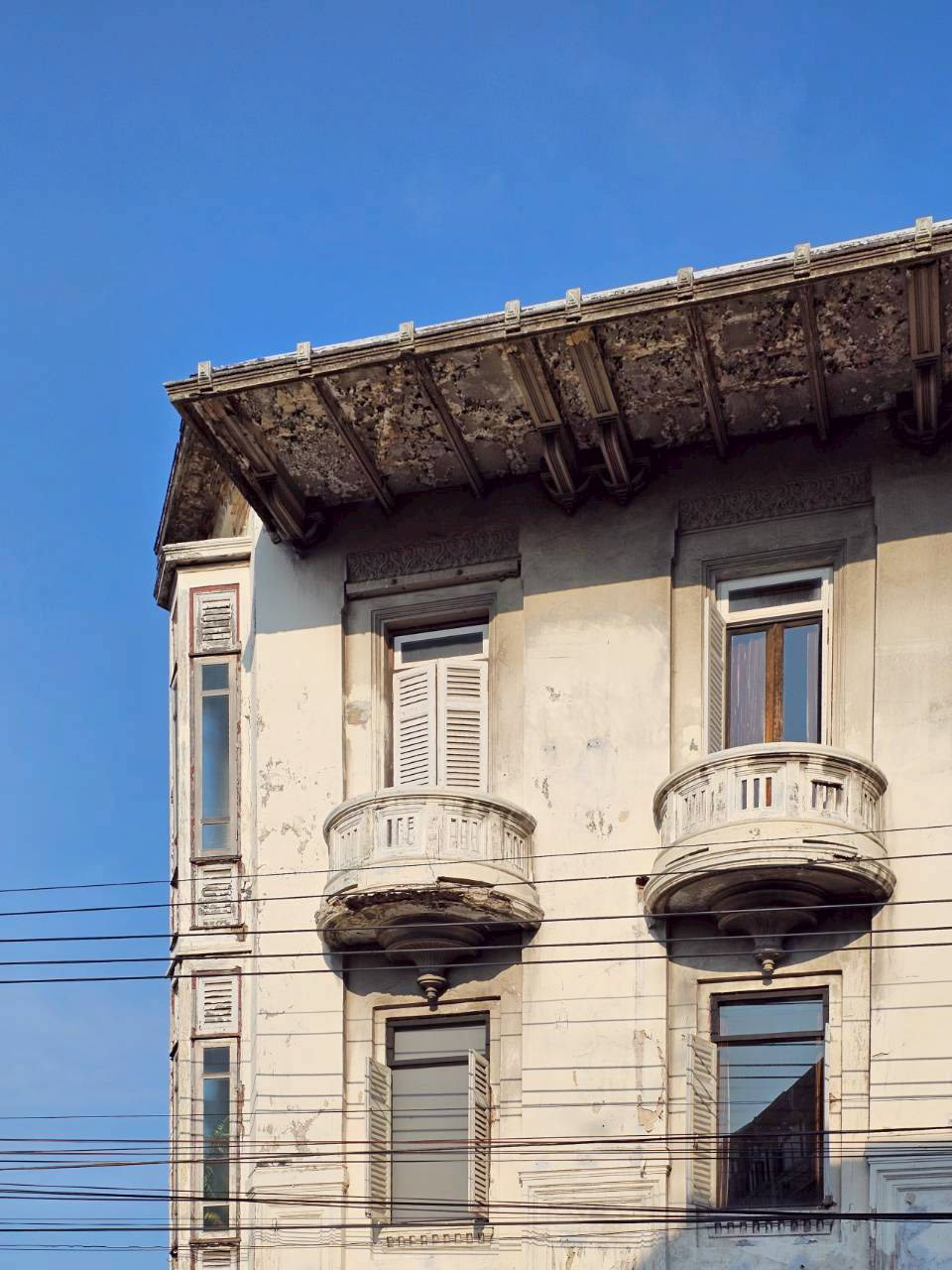
After taking a break, we planned to continue by walking back toward Soi Nana, crossing Rama IV, along Thanon Klan Tan, returning again to Charoen Krung, passing the Odeon Circle, and heading straight toward Song Wat Road — once known as a hub of water-based wholesale trade. Along both sides, Sino-Portuguese shophouses still appear in fragments. Narrow-fronted but deep, they speak to efficient land use in an era when the storefront was for commerce and the interior served as storage and living space. Floral stucco above arched window frames was not only decorative; it reflected wealth, beliefs, and aspirations of business owners in the past. Chinese shop signs still hanging at the front read more like traces of memory than advertising.
At the same time, many buildings are not frozen in history. Adaptive reuse is present: some interiors have become Japanese restaurants, cafés, Thai-fusion eateries, and even stylish bars that operate only at night. Certain conversions stand out, such as Wung Wai Wit Building, adapted into The Warehouse, and Chai Phatthanasilp Building, adapted into The Corner House. Both are important case studies in assigning new roles to old buildings — transforming warehouses and factories into creative spaces, cafés, and gathering places for a younger generation. The use of space shifts from storing goods to creating experiences, while the building’s original dimensions and materials are retained. It feels like a negotiation between past and present, achieved through a striking collaboration between designers and project owners. Yet even as the area becomes more vibrant, it is difficult not to wonder whether these changes still accommodate the community’s original way of life.
Not far ahead, we arrived at Charoen Krung Soi 30. Street art on the wall brought another thought: a wall that once served as a boundary now becomes a medium of perception. People stop to look, take photos, and interpret what they see in different ways. Across the street is the Panyarat Chunsan Building, formerly Thailand’s first tour company — an example of a building that can retain value without changing its function, simply through good care.
What gives Charoen Krung such a clear identity is the diversity of people along the street and within its smaller alleys, alongside a belief that everyone can share space. A Chinese Catholic community around Assumption Cathedral, a Muslim community near Haroon Mosque close to Wat Muang Khae, Buddhist communities in that vicinity, and the Grand Postal Building in Bang Rak — an Art Deco structure that once expressed state authority — are all located within walking distance. These differences are not isolated; they connect through the street, sidewalks, and everyday routines. Eventually, we reached our final destination: Prince Theatre Heritage Stay, an old cinema that had once been adapted into a striking hostel, but ultimately had to close. That story suggests that conserving old buildings is not only about preserving form or atmosphere. It also requires asking whether the new function offered to the building is commercially viable enough for it to “survive.”
This walk along Charoen Krung Road was not only about reading the city through what we see. It was about understanding the relationships among space, time, people, and overlapping social mechanisms. Charoen Krung is not an open-air museum frozen at a single moment. It is a living place, with a history that is not stored on roadside plaques, but carried forward through use, perception, and the everyday relationship between people and space.